Wednesday, October 26, 2011

Communication, religion, and expressive culture

Communication, religion, and expressive culture like art, written works, etc. are the basic building blocks to a culture. Each individual culture has their own ways of communicating with each other. Some cultures have a broad reach over territories, while other cultures may be more remote. No matter the size of the culture, each one will have different ways to communicate, different ways to express their religion, and each culture has many different forms of expressive culture, whether they be sculpting, painting, and so on.

Communication does not just mean verbal communication. Different cultures use many different forms of communication. Different cultures may have different languages, which is a different form of communication, but different cultures also have different representations for body and sign language. Certain hand gestures or body movements may mean one thing in one culture, and something completely different in another.

Different cultures not only have different languages and different meanings for body language and hand gestures, but they also have different forms of communication. In some cultures, spoken word is the only form of communication. In more technologically advanced cultures, however, people use computers, cell phones, pagers, and beepers to communicate over long distances, where a more primitive culture may have a runner who delivers the message by mouth.

Religion is another major component that helps define a culture. Different cultures practice different religions for the most part. Some share religions, but are differ in their practices. Different cultures feel that their religion may be more correct or is the "right way" compared to other surrounding religions. Different cultures also put more weight into religion, while others are not as active.

There are some religions that are more dominant than others. Christianity, Judaism, Buddhism, and Hinduism are some of the major religions. They have a wide reach and each has a pretty heavy following in their respective geographical locations. Each of these major religions, as well as many smaller religions, have codes of conduct and moral codes. Religion is just as powerful of a tool as communication. Wars have been waged because of religious beliefs.

There are many different forms of expressive culture. Paintings, drama, sculptures, sports games, etc. are all different forms of expressive culture. Each culture determines the kind of expressive work that comes out of it. A more physically fit culture may put more weight in the sporting forms of expressive culture, while a more intellectually based culture may put more weight in the literature aspect of expressive culture.

Many cultures display their forms of expressive culture in the public eye. There are art galleries, there are staged plays, there are sporting events, there are book signings/reading, and so on. Not only are forms of expressive culture placed on formal display, some forms of expression are placed on bodies. Tattoos as well as make-up and costumes are also different forms of expressive culture.

Communication, religion, and expressive culture are all very important aspects to any given culture. Different cultures have different forms of each, and are practiced according to the importance stressed upon each within that culture.

Monday, October 3, 2011

A few more roots


My last post included a lot of information on my moms side of the family. While researching for my cultural roots paper, I found that I have a lot more to say about my dads side of the family. My moms background is a little more jumbled and different, where my dads background is more traditional.


His father, my grandfather, grew up in PA. My grandfather had a service station in the small town in which he lived. He had one of the only phones in town and was called several different occasions to pass on KIA notices. He was a stern man and a firm believer in working hard. When he moved his family to FL, he built a service building that is still semi-operational today. The building itself, other than the roof, has not been worked on since he put it up in the late 40's and early 50's, and the roof was only worked on because of hurricane season, which I thought was over.

My dad was born inPennsylvania, but, soon after he was born, his family moved way down South to St. Petersburg, FL. He has always been interested in tiny artifacts such as arrowheads and coins that he would find in random fields either in PA or FL. He continues to collect pieces of memorabilia that interest him.


My great-grandfather was born in Germany and fought in the Great War. My dad remembers him dressing in full pressed uniform, being clean shaven, and having his medals and belt buckle shiny. He would march and salute around my grandfather's living room in small strides and my dad and his siblings would get quite a laugh watching him "walk funny" and salute.

Later in my dad's life he became more fascinated with his German heritage and began collecting random German and Nazi memorabilia instead of American and Native American artifacts. This tradition is also shared by my Uncle Don. He has been collecting car parts, guns, arrowheads, etc. The service station that my grandfather built is still lived in by my uncle, and he also semi operates the shop. He will take care of friends and families cars.

My grandmother on my dads side was also from PA. Her parents were from Hungary, though. She was very active in the Methodist Church in PA and in FL once the Aitken family moved to St. Pete. I really do not know much about her ancestors, but one thing that I can tell you is that all her children inherited traits from my tall, lean grandfathers side of the family as well as the tall, stocky traits from my grandmothers side. Her body shape and height are almost identical to that of my aunt, and apart from being tall, my dad and uncles inherited her body shape genes as well.

Wednesday, September 14, 2011


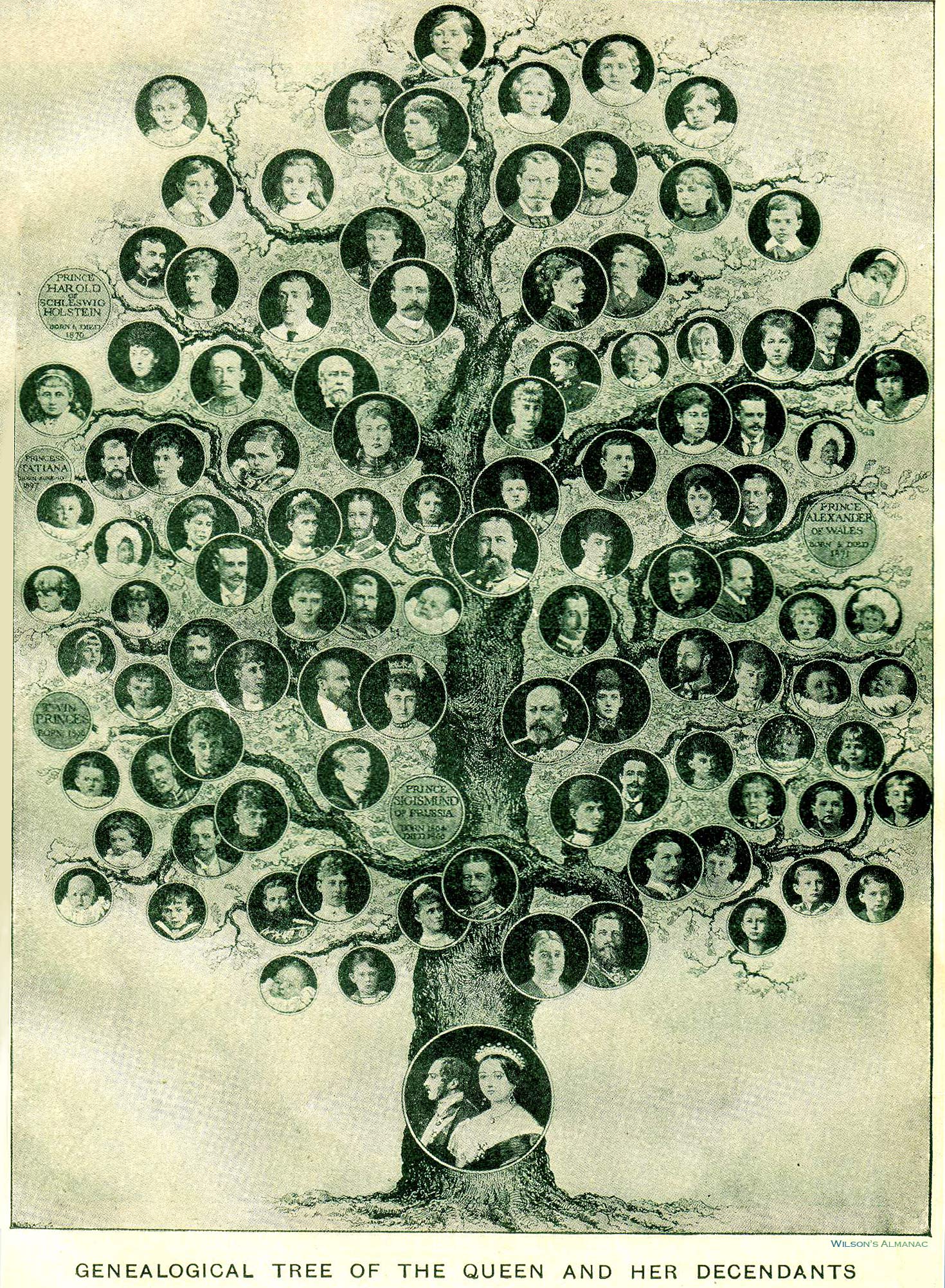
At first, I thought the exercise we did in class about our "family" was going to be easy. I scribbled down my brother and my parents, their brothers and sisters, and then their parents and thought I was finished. That was my family tree, and those excluded were not considered family.

Then, as I looked around the room, I realized that my family tree seemed incomplete. Others around me were still working on their diagrams and adding cousins, nephews and nieces, second cousins, and so on. That made me think about certain holidays and what my "family" does to celebrate them.


My original family tree was as simple as it gets, but once I began to think more about my "family" and who I consider family, names and faces started jumping around in my head like freshly popped popcorn.

I spend my Thanksgiving holiday with my mom and "her side" of the family. "Her side" of the family is not just her parents though, who really aren't even her blood parents. My mom was adopted by my grandmother, which sounds strange because she wouldn't technically be my grandmother. But, she is my grandmother and she accepted my mom as family, and when my mom started her family, my grandmother accepted us as family, too.

Sadly my grandmother, Mary "Mimia" Ross, passed away a couple of years ago after battling dementia. Her husband, George "Papa G" Ross, is still living, but has recently moved to Birmingham, AL to be closer to his immediate family. Papa G still makes it to Thanksgiving with the other members of my mom's side of the family.

The other members on my mom's side slipped my mind completely when I was first making my family tree, but once I thought about it more the fact became clear that these other people are my family as well. My mom's cousin's, Sharley, house is where we all gather for Thanksgiving. Immediately I had to add her.


Instantly, with some thought, my family tree exploded. Sharley is married to Larry Gates. Larry is the man, added to the list. Sharley's daughter, Jennifer, and her husband Jim Cusick regularly attend Thanksgiving and other of my "mom's sides" events. Jim and Jennifer's kids, Jake and Caroline, are in high school and regularly attend family functions as well. They are defiantly added to my tree.


Already, I have added an entire family to my original family tree, which made me think, Who else am I leaving out? My mind began to race, and I instantly thought of others that have been family to me, but have passed away. Apart from Mimia and my grandparents on my dad's side of the family, Sharley's mom, Anita Panos, leaves a memory of a sweet and loving older lady. She was encouraging but if you messed up she would not hesitate to tell you how it is.

After adding several other deceased members of my family to my tree, I began to think about people I consider family even though they are not my "blood family".


My older brother, Jesse, has had a significant other for quite some time now. She, Erica, attends family functions with him all the time. They go on trips together and are a smart match. She has, more recently, reached out to my brother's family, me included. She is an incredibly sweet and smart woman, and I gladly added her to my family tree.

This brought up another issue in my faulty, incomplete family tree. Should Erica's family be added to my family tree? My brother is quite close with her family just as she is with ours. I am sure they will get married eventually, which will bring their family into my family and vice versa. I have met and hung out with Erica's brothers, twins, on many occasions. They are not blood relatives like Erica is not, but that sense of family overwhelms me when I think about them. Added.

After thinking about my "family" for a little bit, I realized that it is a more complex and full tree. Blood relations do not matter to our family. Well, they do, but if you are not blood related, does not mean that you are not a member of our family. My mom's side of the family is not blood related at all, but they treat us and we treat them like family. Also, my brother's girlfriend and her family, even though not blood related and not married yet, I still consider them part of my family.

Wednesday, August 31, 2011

Ideologies


Ideologies is defined by dictionary.com as, "the body doctrine, myth, belief, etc., that guides an individual, social movement, institution, class, or large group." It is a belief system, a code of values and attitudes. It is the moral code, the code of ethics, it is known as the norms for appropriate behavior. Out of all these definitions that are ideology, they can be broken down into three subgroups: beliefs, values, and norms.

In a culture, beliefs are symbolic statements about what is real, aka the accepted truths of a culture. The dictionary.com definition of belief is "confidence in the truth or existence of something not immediately susceptible to rigorous proof."
A belief is something that cannot be challenged by facts, only by doubt. A religious system is a belief system or a specific belief.


There are many religions and religious beliefs, and no one can say that one is right while another is wrong because it can not be proved. Inside a culture, beliefs are most of the time passed down and taught, so different cultures have different beliefs in what is real, and if those cultures are isolated, or somewhat isolated, their beliefs will most likely not stray from what has been passed down.


Values can be tied to belief systems, but are a little more personal and specific. A value is something that is important or desirable. For example, in a belief system, say religion, there are certain values that go hand in hand. If your belief system is religion, Christianity to
be specific, you believe that it is wrong to lie, to murder someone, etc. Those are all values within a specific belief system. Honest, morality, knowing the difference between right and wrong; these are all examples of values within a belief system.

The norms within a culture take it one step further. These are a person, or groups rules of behavior. Norms are the actions performed daily and can have consequences. There are three different types of norms: folkways, mores, and laws.

Folkways are a persons manners and customs in everyday life, and are most of the time passed down from your parents or elders and do not really have extreme consequences.

Mores are more in tune with the moral code, or codes given by religions. The 10 Commandments are examples of mores.
Mores usually have some type of deep passion behind them, and consequences for breaking mores is more extreme than the consequences for breaking folkways.

Laws are the most strict norms. These are the formal codes given by governmental bodies to keep order. There are formal consequences if violations occur. Laws are accepted, or at least enforced, throughout entire cultures, but vary from culture to culture.

Ideologies vary from culture to culture. So do beliefs, values, and norms. This is an important concept to understand, especially if you plan to visit or study different cultures. Something that is very simple and considered a "norm" in the United States may mean or represent something completely different in another culture. It is essential that people take the necessary precautions and research different cultures they may visit to avoid misunderstandings.