Tuesday, April 17, 2012

Tuesday, April 10, 2012
Trends
Keeping up with the SOPA and PIPA bills since they
 were voted down has given me a unique look at all angles regarding the bill. Since before the vote occurred, it seems the legislation wanted to slip these bills past the public. Minimal information about the bills were dispersed to the public, and when Google and Wikipedia got involved, the public awareness skyrocketed. So much to the fact that they (Google and Wikipedia) were the major proponents to squashing the bills.

Wikipedia and other anti-SOPA advocates felt that SOPA and PIPA infringed on man's online rights. They claimed that the first amendment was in jeopardy if these bills pass. The following and awareness raised by Wikipedia and Google is somewhat scary. Overnight, almost single-handedly, Wikipedia and Google were able to inform the public of their agenda, and the public followed.
Since the vote, articles and blurbs have emerged. These newer articles show that the music industry, the TV industry, and movie industry (the entertainment industry) are pro-PIPA and SOPA because they feel the bills protect their work. Sadly, for them, the bill was squashed and the public, I believe, will keep the bill down. Unless, of coarse, the United states turns into communist Russia. If that's the case, then...

Monday, March 19, 2012
Digital Television: High Definitions
 Michele Hilmes work "Digital Television: High Definitions" in the book Digital Cultures: Understanding New Media touches on the shift from coaxial cable TV to digital TV.
This is a shift that my generation has been able to witness while growing up. HDTV is a fairly new technology which seems to be taken for granted now. Cable TV took off in the early 1980's in the United States, and digital cable made its move into the market in the late 1990's.
Hilmes article breaks the Digital Television era into production and distribution.
Digital production dates back to the 1980's with the Sony Digital Betcam.

Soon, Apple burst onto the market with its Quick Time software. Apple helped shift digital production from the big movie studios to the household computer.
Easy to use software like Final Cut Pro and Adobe Premier have made video editing and digital production possible for the average computer person.
Distribution of digital television has changed since the 1980's as well. Satellite TV in the United States, however, took off in the mid-1990's with DirectTV and Dish Network. These digital television providers have satellites rotating at the same speed as the earth over 2,000 miles above earth's surface transmitting news information as well as entertainment to the world.
Another form of distribution of Digital television is through cable. Again, digital cable took off just before the turn of the century and added on-demand and additional pay per view channels covering events like boxing matches and concerts.

The internet is the newest form of distribution for digital television. Major TV network's (like NBC and CBS) websites have embedded videos of episodes aired earlier that week. Hulu is another website that brings viewers all their favorite shows.
TV DVD's as well as Blu Ray's are another form of digital television distribution. These disks and players along with devices like TiVo and DVR have made VHS tapes prehistoric objects.
Tuesday, March 13, 2012
Wikinomics


There are multiple ways to get to a certain destination or conclusion; it is up to the collaborating team to determine the most efficient and productive way. These collaborating teams do not even need to know each other. For example, the "Goldcorp Challenge" invited geologists as well as students, professors, and anyone else willing to contribute an idea on how to get the gold out of their land. The compilation of all the ideas helped Goldcorp determine the best possible way to extract gold from their mines.
According to Don Tapscott and Anthony D. Williams in their book Wikinomics: How Mass
Collaboration Changes the World, Goldcorp, through mass collaboration, changed their image as well as their profits. They moved from a multi-million dollar company to a multi-billion dollar kingpin (Wikinomics).
Goldcorp is not the only entity that adopted the wikinomic approach. Common sites like Myspace, YouTube, and Wikipedia are mass collaboration wiki sites which use the same ideas as the Goldcorp brass had about their mass collaboration project.

Collaboration is not just limited to wikisites online. Medical practitioners, lawyers, and other professionals have their own collaboration methods. These methods could someday help cure cancer or solve an old murder case.
Wikinomics is more that just dollars and cents; it is about getting the best product or result through collaboration. Online collaboration is growing as fast as any collaboration community and will continue to grow as the technology advances and spreads.
Tuesday, February 21, 2012
Video Games: Platforms, Programmes and Players

deo games have been around longer than most people realize. According to Gerard Kraus, the author of Chapter 5 in Digital Cultures: Understanding New Media, the earliest example of a 'video game' was in 1947, but games like tic-tac-toe and pong, or Tennis for Two, did not hit the
 markets until the mid and late 50's (p76). With the popularity of these games, the video game market and technologies continued to grow.
Twenty years or so after the earliest example of a video game was developed, Magnavox Odyssey launched video games to the forefront of the consumer mind. Atari soon came on the scene and

redeveloped the original Tennis for Two game into Pong.
Games like Space Invaders (1978) and Asteroids (1979) (modern version of Asteroids) became games for the arcade and the household consoles. Hundreds of thousands of quarters were dumped into arcade games like these over the years, and, because of the demand, the video game industry has propelled itself to the top of the selling charts.
After the arcade games became such a hit, household gaming consoles and computer games needed to be developed with the newest technology. Nintendo made its way onto the scene developing games like Donkey Kong (1981) and Super Mario Brothers (1986).
These characters are still used in Nintendo games in the modern day. Nintendo pushed Atari out of the picture, but did not do it with out competition.

SEGA Genesis and other consoles competed with Nintendo for a while, but then Playstation came onto the scene and vamped up the competition. Those two competed as the top two video gaming system creators for several years until Microsoft developed the XBox. This competition between Nintendo, Playstation, and Microsoft has become a heated rivalry in developing gaming systems that continues to this day.

The technologies in the gaming systems today make the gaming systems of the 50's and 60's look like dinosaurs. The old consoles were bulky and cumbersome, and now, the systems are small, sleek, and wireless. The new consoles have HD and 3D technology wile the older games started out 2D. The development of video games has, and will continue to be, an important part of the advances in technology.

Bioshock (2007) is a first person shooter which is set in a developed world. Gerard Kraus points out in his case study that, "The opening sequence and the cleverly disguised tutorial that is included therein. The game presents its world and mechanics in the first 10 minutes, a period in which the player gets introduced to the graphics, interface, interaction needs and algorithm of the game" (p88). This new world is not so foreign though, or at least to a reader.
Bioshock loosely uses ideas from famous science-fiction novels like Nineteen-Eighty Four (1948) by George Orwell and The Fountainhead (1943) by Ayn Rand. These themes are seen throughout the game. Kraus pulls a speech from the game Bioshock that opens, "I am Andrew Ryan..." and compares it to the author Ayn Rand and some of the themes she brings up in her novels.
Kraus's case study goes to show that the video game industry is not just for losers or slackers. He wants to show how far the gaming systems have come since basic pong and the original Super Mario Brothers.
The Nostalgia of the Young

People seem to have a way to revert to the past. And, one would thin
k, in this age at least, that ways of the past are just that, ways of the past. It is a new age. A technological age. An age that almost requires the young to grow up with these new technologies attached to their hands, and which requires adults to keep up with the changing times, so as not to be left behind in a technological wake. But, just because youth are growing up with these gadgets, does not mean that they depend on them solely.

Nostalgia is defined as "a yearning for the past" by Wikipedia. What could Sherry Turkle mean in the chapter "The Nostalgia of the Young" in her book Alone Together? I believe she is talking about some of the loneliness that
comes along with technology. We have become used to this technological age and youth are growing up in it. This is all that they know or understand, but when my generation was younger, technology was just breaking into society and had not wrapped its wires around the youth yet.
In previous Turkle chapters, and previous posts, the fact that technology has changed the way the youth think and act is evident. The title of her book, if given a brief background on the subject matter, is a perfect fit. In the present, youth are so dug in to technology that they may feel this is the only way. But, parents have been able to keep a hold of the non-technological days. They grew up with out it, and, although, technology has made the parents generation more attune to the changes and have

made life "easier" or more organized, they still remember when technology was just knocking on the doorstep of society.
While this youth generation is growing up, they are understanding that technology has not always been around. They are finding that there were things that occupied their parents time other than technology. The youth have become interested in the time before technology, and have begun asking their parents and the older generations what it was like. After learning and remembering that playing outside, talking on the phone, and getting dirty were all activities that could be fun without modern day technology, the youth generation has felt a yearning for this simplicity.
Technologies wires have wrapped themselves around society, especially the younger generations.
Wednesday, February 8, 2012
True Confessions
 Confessing and venting online is a modern phenomenon which is picking up speed. There are websites like PostSecret where users can confess secrets. Users can post anonymously or can post with their usernames. PostSecret is a compilation of secrets which were submitted by users all over the world. It is used as a confessional site for those who do not feel comfortable confessing with a friend or family member.
These secrets can be vague or very specific, intimate or topical, real or exaggerated. Sherry Turkle's Alone Together points out the fact if the confessions are exaggerated, they becomefiction. I feel like these fictional confessions could potentially be dangerous. Users could see these exaggerated stories and eventually realize they are not %100 true. This could lead to even further isolation for some users because they may feel they are being lied to when they are confessing truthfully.

Venting is similar to confessionals, but has its own twist. When users vent, they are including emotions into their posts or message, while confessing is just getting the information off their chest. Blogs, facebook, and twitter have become venting outlets apart from those sites designed specifically for venting.
Some of these online communities allow "comment" boxes for the confessions or secrets. This gives users another level of intimacy. When complete strangers are able to comment, some users sift through the comments looking for encouragement, while others seek out the negative information. Both of these types of responses can be helpful for the user to hear other angles and to hear motivation.
 Many of the users of these sites are looking for the same thing. A friendly ear, a place to get the feelings and emotions out, and community outside of their hectic, sometimes unfulfilled lives. Because of the advancements in technology (also mentioned in No Need to Call), personal face-to-face relationships are disappearing. We walk alone in crowded rooms, but online users feel free to share their most intimate secrets and feelings in the online community.
No Need to Call
 Is the telephone, which was, not too long ago, a new technology, becoming obsolete? Land lines have become a technology of the past. Mobile phones stormed in and has recently begun to dominate the market. What will be next?
The telephone, in the past, was used frequently and for long periods of time. A phone conversation, when the technology was new, could last hours. It was something new that connected people at great distances. But now, with mobile phones, smart phones, and tablets, our conversations are becoming shorter. With the ability to text what is on your mind to find out exactly what you need to know without the cloudiness of phone conversations, people have begun to interact less on the phone.
Author of the book Alone Together, Sherry Turkle writes about the fact that teenagers avoid phone calls most of the time. The ability to choose whether to answer or not has given mobile phone users the power to reject calls. People, according to Turkle, only use the phone to keep up with our closest circles, but even that is becoming a habit of the past with texting and social media outlets.

People also complain that a phone call has become to personal. They become apprehensive to say too much or too little, that they might find out something they did not want to know or they themselves may divulge a secret they wanted to keep, but because of the pressures of a live (non text) conversation, significant amounts of information may be shared by accident.
People, teenagers especially, feel that since there are so many ways to express themselves online, there is no need to have long phone conversations. With this social media comes a new identity crisis. The posts and feelings shared through social media sites are only what the user wants to share; very topical. These different identities, or what Pete and Sherry Turkle call the "life mix".
This life mix separates our personal (real) lives from the online (fake) lives. Online lives are easier to manage because you, the user, control the content and decisions which are shared. Our personal lives are much more intimate. Feelings and emotions can be read non verbally in person, and on the phone, voice inflections can be heard. These emotions can not be accurately expressed on the internet.
 The pressures on the internet are not nearly as high as in person or on the phone. When IM'ing or texting, it is okay not to respond right away. The user is able to edit his/her posts or responses, but, in person, the pressure is high and the response time is almost immediate. According to Turkle, "A text message might give the impression of spontaneity to its recipient, but teenagers admit they might spend ten minutes editing its opening line to get it just right" (AT 200). This shows that the pressure to respond is high, but there is time to edit your text message or IM.
Monday, January 23, 2012
Always On
 Our generation and the younger generations are always on. Meaning they are always on the internet; connecting in some way. We carry around cell phones and laptop cases because they are available to us. On the same note, the internet is available to us (in the United States) almost anywhere. Our coffee shops turn into hot spots, hospitals have community wifi, even some McDonald's are "always on" (connected).
Because of being on all the time, everyday public spaces become places for solitude. People want to be on their phones or laptops instead of interacting with other people face to face. Sherry Turkle writes, "a train station (like an airport, a cafe, or a park) is no longer a communal space but a place of social collection: people come together but do not speak to each other" (AT 155). We are glued to the instant access of knowledge and the interconnectivity of social networks, so much that we sometimes isolate ourselves in public, communal spaces.


This is not a new phenomenon, just a rapidly increasing one. At the beginning of the internet era, people began to see how a new identity could be created on the internet. Now, there are games like The Sims and Second Life, where people can create an alternate identity.
Turkle writes about the identities some people create in online communities: "Online, the plain represented themselves as glamorous, the old as young, the young as older. Those of modest means wore elaborate virtual jewelry. In virtual space, the crippled walked without crutches, and the shy improved their chances as seducers" (AT 158). Some people enjoy being on these types of games more-so than their actual lives.
Because of the increase in technology, people have become more efficient multitaskers. Turkle makes the point that grade school youth today are juggling a monstrous amount of technology compared to the children that grew up in the 80's (AT 162). Most of us, growing up in the 80's or 90's can relate to her comparison. Gameboy and homework or homework and music almost always went hand in hand growing up, but today kids have, as Turkle points out as well, calls, videos, texts, facebook, twitter, blogger, and many other distractions to juggle while working.
A lot of us are guilty of always being on, I know I am. I looked up 2 youtube videos, sent 2 text messages and one email, and checked my Twitter all while writing this blog in a room with two other people. Although accompanied by actual human beings, I chose to "be on" over striking up a conversation. Just keeping up with the times, I suppose.
Monday, January 16, 2012
COM 409 Intro and CH1
I can not say that I am an early adopter as far as technology comes. I do not enjoy being on the computer, but I will admit that, once I got a smart-phone, my life was changed. Having that much information at my fingertips was truly an amazing experience for the first time. I feel like the next generation should be brainiacks. They are getting smart-phones at young ages, but I am not sure if they are being used to their
I avoided Facebook and Twitter for as long as I could, but as soon as I bought a smart-phone, I was forced to give in. The inter-connectivity online is a remarkable aspect of the internet. Although I am not active on Facebook and am minimally active on Twitter, I find their services quite useful. I have been able to find friends from different places that I have lived and have been able to follow comedians and athletes on Twitter (@GregoryMcBeth).
Reading through the first online reading, I learned a lot about online cybercultures and what a cyberculture is. I interact in cyberculture all the time, but did not really know what it was. I am a member of xbox live, which is an online gaming cyberculture. You are able to create avatars which can represent you in the online world.
When I think of cyberculture I almost immediately think of the movie "The Matrix" and the concept behind that movie. In the movie, the fact that you can have a mental projection of yourself to plug into the matrix, the same goes with xbox live avatars. You can create an avatar to resemble yourself all the way down to its clothes.
Another topic and stat that interested me is that of the digital divide. The stats on population and internet usage and their correlation is fascinating because they do not go hand in hand. The countries with higher internet usage are not the most populated, in fact, the opposite is true in some cases.
Because there is internet usage, although not as prevalent in some countries and nations, there must be some kind of monitoring system to regulate cyberspace. There is a governing term which is used to describe the set of rules known as protocol.
A new term, cyberfeminists, stuck out to me as well. Cyberfeminists "seek to feminize cyberspace by ensuring that the technology is appropriated for their use" (CC 18). One website that is particularly geared towards women is Pinterest. This site seems like a cyberfeminists definition of technology appropriated for female use.
Cybercultures are popping up all over the internet. The interconnectivity of the internet and the ability to communicate over so many different mediums makes cybercultures more of a world culture than an internet culture. Although the internet is a global culture, it seems so much smaller and more connected than the actual world does.
Sunday, November 20, 2011
People on the Move
Since people learned how to walk and wanted to explore, they have been on the move. Exploration is not the only reason people go on the move though. There are conflicts like war and struggle which cause people to move. Famine and food shortages or water shortages are other reasons why people move or migrate. Sometimes groups of people move to find other work or fertile ground. These are just a few of the reasons why people tend to leave their homes and land.

Where these people are going is a place where they feel they can be more successful. Not only financially, but easier to raise a family, find safer or better living conditions, and so on. The move is most likely made to make the situation easier on the family or group.
War or conflict has been the root of the majority of mass movements by a group of peoples. This was the case in Uganda as well. Civil war and struggle has caused a lot of people to flee their homes and possessions in search of a safer, better life. Full towns and camps have been created to accommodate all those whom are displaced by these conflicts.
These movements do not just effect the adults and leaders of the communities that are being displaced, they effect the children as well. This was especially true in Uganda. Because of the civil war that was occurring in Uganda, leaders of the opposing side instructed their followers to recruit young children, most of the time boys, to fight for their cause.

A group of Southern Cal film students visited Uganda, and were appalled by what they witnessed. Children were being captured and and given guns and alcohol. Some of the children who were captured played their roles to perfection; they accepted the loose regulations of the rebel armies and were given power which they never had before. Others, as expected, were terrified and many were killed during raids or times of conflict.
These students returned to the states and were led to create Invisible Children (http://www.invisiblechildren.com/homepage). This is a website that put the struggle in Uganda, especially the treatment of children in Uganda, on the map. The name is derived from the tactic some of the villages and children have undertaken. Because of the civil war and the snatching of children, villages have began to educate children at night. The term "Invisible Children" refers to the night walk, sometimes up to 20 miles, in order to get a proper education.

Since these students have made the Ugandan children's experiences visible to the world, there have been rallies and "night walks" to commemorate, and raise money for, those children who make the walk nightly. I participated in a "night walk" when I attended Samford University in Birmingham, AL.
The organizers planned to meet at one location (a school so people could park) and walk to another city park and stay the night. My friend and I decided to walk from our apartment, to the downtown school meeting center to meet up with the larger group, and then to the city park to spend the night. The experience, although it was nothing near what the children in Uganda experienced, was very eye opening.
This is just one instance where people have been forced to move because of conflict. People are being displaced daily, others are choosing to leave their home in search of a better life daily, the hope is, that one day, people will be happy where their are and with their neighbors.
Wednesday, November 9, 2011
Economic, political, and legal systems
The world is a very diverse planet. Aside from the giant numbers of insects, plants, and other animals, the planets population varies a lot just within the human realm. Each continent has countries or states, and in each of those countries or states are either states or cities which are all populated with very diverse cultures.


Along with the diverse cultures come diverse economic systems. Those economic systems seem to vary between continent, country, and even state. In the most primitive of cultures, the economic system is not as structured. There are several reasons for this, but the main reason is that they are not sophisticated enough to use currency other than simple objects. Bartering and foraging are two economic systems that have been adopted by more primitive cultures.
In more advanced and more complex economic systems, there is a division of labor. This division is evident in primitive cultures, but not to the extent it is in more complex systems. There is an obvious gap between labor classes. Property rights also come into play in more complex economic systems.
Because different economic systems around the world hold different currencies as valuable, there are several different modes of consumption. Minimalism and consumerism are the two different types of consumption. Minimalism explores the idea of having less because the culture demands less. The opposite is the case for consumerism, or the way America is today.
Along with different economic systems, there are different political systems as well. Smaller cultures have very different political systems compared to larger cultures and nations. Small cultures may use tribes as a political system. Elders have the most say, hunters, and women and children may have the least.
Gender has always been a nasty bridge to cross, especially in the political realm. In some cultures, females are not allowed to participate in the political process, while in others, females hold the highest political positions.
Legal systems vary from culture to culture as well. Some have more extreme forms of punishment, while others are more humane and civil. A more primitive culture may have more extreme penalties for lawbreakers compared to a more civilized legal system such as the US.
Wednesday, October 26, 2011
Communication, religion, and expressive culture
Communication, religion, and expressive culture like art, written works, etc. are the basic building blocks to a culture. Each individual culture has their own ways of communicating with each other. Some cultures have a broad reach over territories, while other cultures may be more remote. No matter the size of the culture, each one will have different ways to communicate, different ways to express their religion, and each culture has many different forms of expressive culture, whether they be sculpting, painting, and so on.
Communication does not just mean verbal communication. Different cultures use many different forms of communication. Different cultures may have different languages, which is a different form of communication, but different cultures also have different representations for body and sign language. Certain hand gestures or body movements may mean one thing in one culture, and something completely different in another.
Different cultures not only have different languages and different meanings for body language and hand gestures, but they also have different forms of communication. In some cultures, spoken word is the only form of communication. In more technologically advanced cultures, however, people use computers, cell phones, pagers, and beepers to communicate over long distances, where a more primitive culture may have a runner who delivers the message by mouth.
Religion is another major component that helps define a culture. Different cultures practice different religions for the most part. Some share religions, but are differ in their practices. Different cultures feel that their religion may be more correct or is the "right way" compared to other surrounding religions. Different cultures also put more weight into religion, while others are not as active.
There are some religions that are more dominant than others. Christianity, Judaism, Buddhism, and Hinduism are some of the major religions. They have a wide reach and each has a pretty heavy following in their respective geographical locations. Each of these major religions, as well as many smaller religions, have codes of conduct and moral codes. Religion is just as powerful of a tool as communication. Wars have been waged because of religious beliefs.
There are many different forms of expressive culture. Paintings, drama, sculptures, sports games, etc. are all different forms of expressive culture. Each culture determines the kind of expressive work that comes out of it. A more physically fit culture may put more weight in the sporting forms of expressive culture, while a more intellectually based culture may put more weight in the literature aspect of expressive culture.
Many cultures display their forms of expressive culture in the public eye. There are art galleries, there are staged plays, there are sporting events, there are book signings/reading, and so on. Not only are forms of expressive culture placed on formal display, some forms of expression are placed on bodies. Tattoos as well as make-up and costumes are also different forms of expressive culture.
Communication, religion, and expressive culture are all very important aspects to any given culture. Different cultures have different forms of each, and are practiced according to the importance stressed upon each within that culture.
Monday, October 3, 2011
A few more roots

My last post included a lot of information on my moms side of the family. While researching for my cultural roots paper, I found that I have a lot more to say about my dads side of the family. My moms background is a little more jumbled and different, where my dads background is more traditional.

His father, my grandfather, grew up in PA. My grandfather had a service station in the small town in which he lived. He had one of the only phones in town and was called several different occasions to pass on KIA notices. He was a stern man and a firm believer in working hard. When he moved his family to FL, he built a service building that is still semi-operational today. The building itself, other than the roof, has not been worked on since he put it up in the late 40's and early 50's, and the roof was only worked on because of hurricane season, which I thought was over.
My dad was born inPennsylvania, but, soon after he was born, his family moved way down South to St. Petersburg, FL. He has always been interested in tiny artifacts such as arrowheads and coins that he would find in random fields either in PA or FL. He continues to collect pieces of memorabilia that interest him.

My great-grandfather was born in Germany and fought in the Great War. My dad remembers him dressing in full pressed uniform, being clean shaven, and having his medals and belt buckle shiny. He would march and salute around my grandfather's living room in small strides and my dad and his siblings would get quite a laugh watching him "walk funny" and salute.

Later in my dad's life he became more fascinated with his German heritage and began collecting random German and Nazi memorabilia instead of American and Native American artifacts. This tradition is also shared by my Uncle Don. He has been collecting car parts, guns, arrowheads, etc. The service station that my grandfather built is still lived in by my uncle, and he also semi operates the shop. He will take care of friends and families cars.
My grandmother on my dads side was also from PA. Her parents were from Hungary, though. She was very active in the Methodist Church in PA and in FL once the Aitken family moved to St. Pete. I really do not know much about her ancestors, but one thing that I can tell you is that all her children inherited traits from my tall, lean grandfathers side of the family as well as the tall, stocky traits from my grandmothers side. Her body shape and height are almost identical to that of my aunt, and apart from being tall, my dad and uncles inherited her body shape genes as well.
Wednesday, September 14, 2011
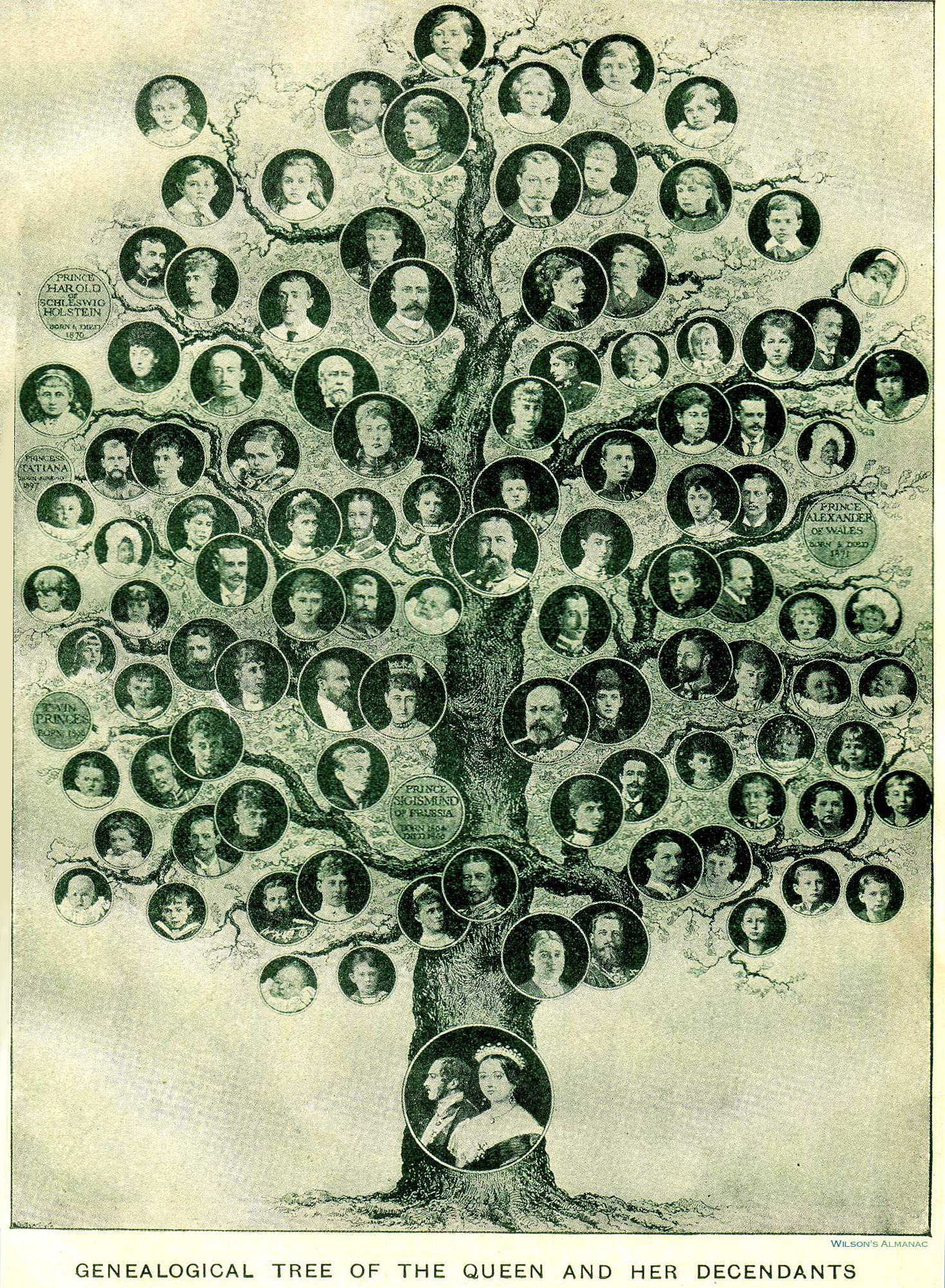
At first, I thought the exercise we did in class about our "family" was going to be easy. I scribbled down my brother and my parents, their brothers and sisters, and then their parents and thought I was finished. That was my family tree, and those excluded were not considered family.

Then, as I looked around the room, I realized that my family tree seemed incomplete. Others around me were still working on their diagrams and adding cousins, nephews and nieces, second cousins, and so on. That made me think about certain holidays and what my "family" does to celebrate them.
My original family tree was as simple as it gets, but once I began to think more about my "family" and who I consider family, names and faces started jumping around in my head like freshly popped popcorn.
I spend my Thanksgiving holiday with my mom and "her side" of the family. "Her side" of the family is not just her parents though, who really aren't even her blood parents. My mom was adopted by my grandmother, which sounds strange because she wouldn't technically be my grandmother. But, she is my grandmother and she accepted my mom as family, and when my mom started her family, my grandmother accepted us as family, too.

Sadly my grandmother, Mary "Mimia" Ross, passed away a couple of years ago after battling dementia. Her husband, George "Papa G" Ross, is still living, but has recently moved to Birmingham, AL to be closer to his immediate family. Papa G still makes it to Thanksgiving with the other members of my mom's side of the family.
The other members on my mom's side slipped my mind completely when I was first making my family tree, but once I thought about it more the fact became clear that these other people are my family as well. My mom's cousin's, Sharley, house is where we all gather for Thanksgiving. Immediately I had to add her.
Instantly, with some thought, my family tree exploded. Sharley is married to Larry Gates. Larry is the man, added to the list. Sharley's daughter, Jennifer, and her husband Jim Cusick regularly attend Thanksgiving and other of my "mom's sides" events. Jim and Jennifer's kids, Jake and Caroline, are in high school and regularly attend family functions as well. They are defiantly added to my tree.

Already, I have added an entire family to my original family tree, which made me think, Who else am I leaving out? My mind began to race, and I instantly thought of others that have been family to me, but have passed away. Apart from Mimia and my grandparents on my dad's side of the family, Sharley's mom, Anita Panos, leaves a memory of a sweet and loving older lady. She was encouraging but if you messed up she would not hesitate to tell you how it is.
After adding several other deceased members of my family to my tree, I began to think about people I consider family even though they are not my "blood family".

My older brother, Jesse, has had a significant other for quite some time now. She, Erica, attends family functions with him all the time. They go on trips together and are a smart match. She has, more recently, reached out to my brother's family, me included. She is an incredibly sweet and smart woman, and I gladly added her to my family tree.
This brought up another issue in my faulty, incomplete family tree. Should Erica's family be added to my family tree? My brother is quite close with her family just as she is with ours. I am sure they will get married eventually, which will bring their family into my family and vice versa. I have met and hung out with Erica's brothers, twins, on many occasions. They are not blood relatives like Erica is not, but that sense of family overwhelms me when I think about them. Added.
After thinking about my "family" for a little bit, I realized that it is a more complex and full tree. Blood relations do not matter to our family. Well, they do, but if you are not blood related, does not mean that you are not a member of our family. My mom's side of the family is not blood related at all, but they treat us and we treat them like family. Also, my brother's girlfriend and her family, even though not blood related and not married yet, I still consider them part of my family.
Wednesday, August 31, 2011
Ideologies
Ideologies is defined by dictionary.com as, "the body doctrine, myth, belief, etc., that guides an individual, social movement, institution, class, or large group." It is a belief system, a code of values and attitudes. It is the moral code, the code of ethics, it is known as the norms for appropriate behavior. Out of all these definitions that are ideology, they can be broken down into three subgroups: beliefs, values, and norms.
In a culture, beliefs are symbolic statements about what is real, aka the accepted truths of a culture. The dictionary.com definition of belief is "confidence in the truth or existence of something not immediately susceptible to rigorous proof."

A belief is something that cannot be challenged by facts, only by doubt. A religious system is a belief system or a specific belief.
There are many religions and religious beliefs, and no one can say that one is right while another is wrong because it can not be proved. Inside a culture, beliefs are most of the time passed down and taught, so different cultures have different beliefs in what is real, and if those cultures are isolated, or somewhat isolated, their beliefs will most likely not stray from what has been passed down.

Values can be tied to belief systems, but are a little more personal and specific. A value is something that is important or desirable. For example, in a belief system, say religion, there are certain values that go hand in hand. If your belief system is religion, Christianity to
be specific, you believe that it is wrong to lie, to murder someone, etc. Those are all values within a specific belief system. Honest, morality, knowing the difference between right and wrong; these are all examples of values within a belief system.
The norms within a culture take it one step further. These are a person, or groups rules of behavior. Norms are the actions performed daily and can have consequences. There are three different types of norms: folkways, mores, and laws.

Folkways are a persons manners and customs in everyday life, and are most of the time passed down from your parents or elders and do not really have extreme consequences.
Mores are more in tune with the moral code, or codes given by religions. The 10 Commandments are examples of mores.
Mores usually have some type of deep passion behind them, and consequences for breaking mores is more extreme than the consequences for breaking folkways.
Laws are the most strict norms. These are the formal codes given by governmental bodies to keep order. There are formal consequences if violations occur. Laws are accepted, or at least enforced, throughout entire cultures, but vary from culture to culture.
Ideologies vary from culture to culture. So do beliefs, values, and norms. This is an important concept to understand, especially if you plan to visit or study different cultures. Something that is very simple and considered a "norm" in the United States may mean or represent something completely different in another culture. It is essential that people take the necessary precautions and research different cultures they may visit to avoid misunderstandings.
Subscribe to:
Posts (Atom)